

Sanity Agency
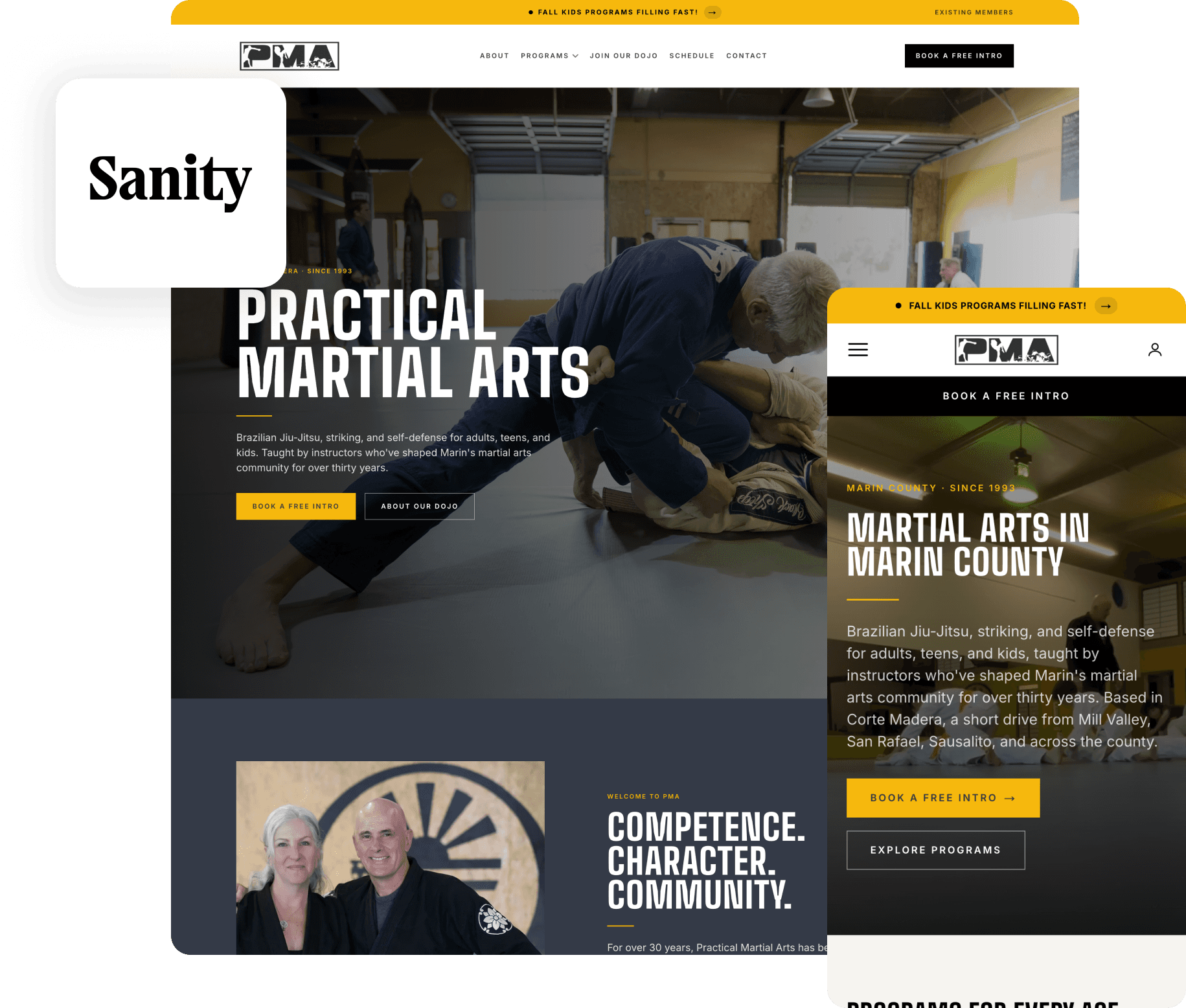
Publish without waiting on a developer
Sanity is the content platform we reach for when a marketing team needs to ship without waiting on a release. Content is structured and stored once, then delivered to a website, a storefront, an app, or all three, through an API rather than a theme.
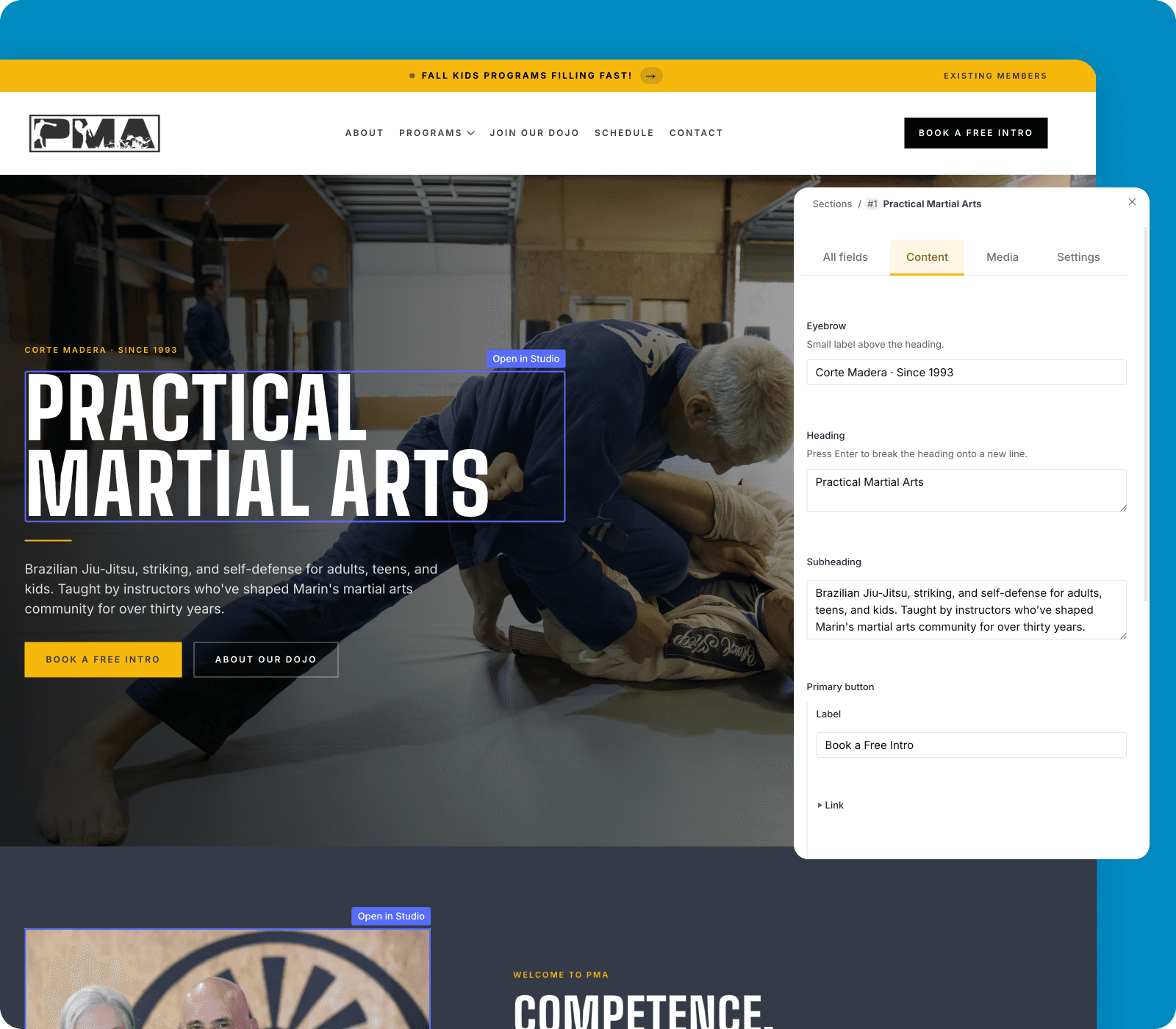
We design the editing experience as deliberately as the front end: fields that match how your team actually writes, live preview of the real page, and a schema that will still make sense in three years.
Why Sanity
Why We Build on Sanity
Before the services, the reason. Sanity separates the content from the page it ends up on, which is what lets a marketing team publish without a release and lets the same content serve a website, a storefront and an app at once.
Structured content, not pages
Content is stored as data rather than as blobs of markup, so the same fields can feed a web page, an email, and an app without being rewritten for each.
A studio you can shape
The editing interface is itself code, so it can be tailored to your team, grouped into tabs, validated and previewed, instead of bending your process to fit a generic admin.
Live preview of the real page
Editors see the actual front end update as they type, rather than an approximation in a preview pane.
Content as an API
Query exactly what a page needs with GROQ, and publish changes through a webhook so the site updates without a rebuild.
No plugin sprawl
Behaviour is written and reviewed like the rest of the codebase, which removes a whole class of maintenance and security work that plugin-driven sites carry.
What changes
What your week looks like afterwards
A page goes live the moment it is written
No ticket, no release, no waiting for someone else's deploy window. The person who wrote it publishes it.
A campaign is built, not requested
Landing pages come out of the same blocks the rest of the site uses, so marketing assembles one in an afternoon rather than briefing it.
Copy is written once and reused
A service description, a client quote, a set of figures: written in one place and pulled in wherever it is needed, so there is no third copy to go stale.
You see the real page while you type
Live preview against the actual front end, not an approximation of it, so nobody publishes to find out what it looks like.
Developers get their week back
Engineering stops being a content bottleneck and goes back to the things only engineering can do.
The model still makes sense in three years
Content shaped around what the business actually has rather than around the pages it happens to have today, so a redesign is a front-end job.
What we do
Sanity Services
Content Modelling & Schema Design
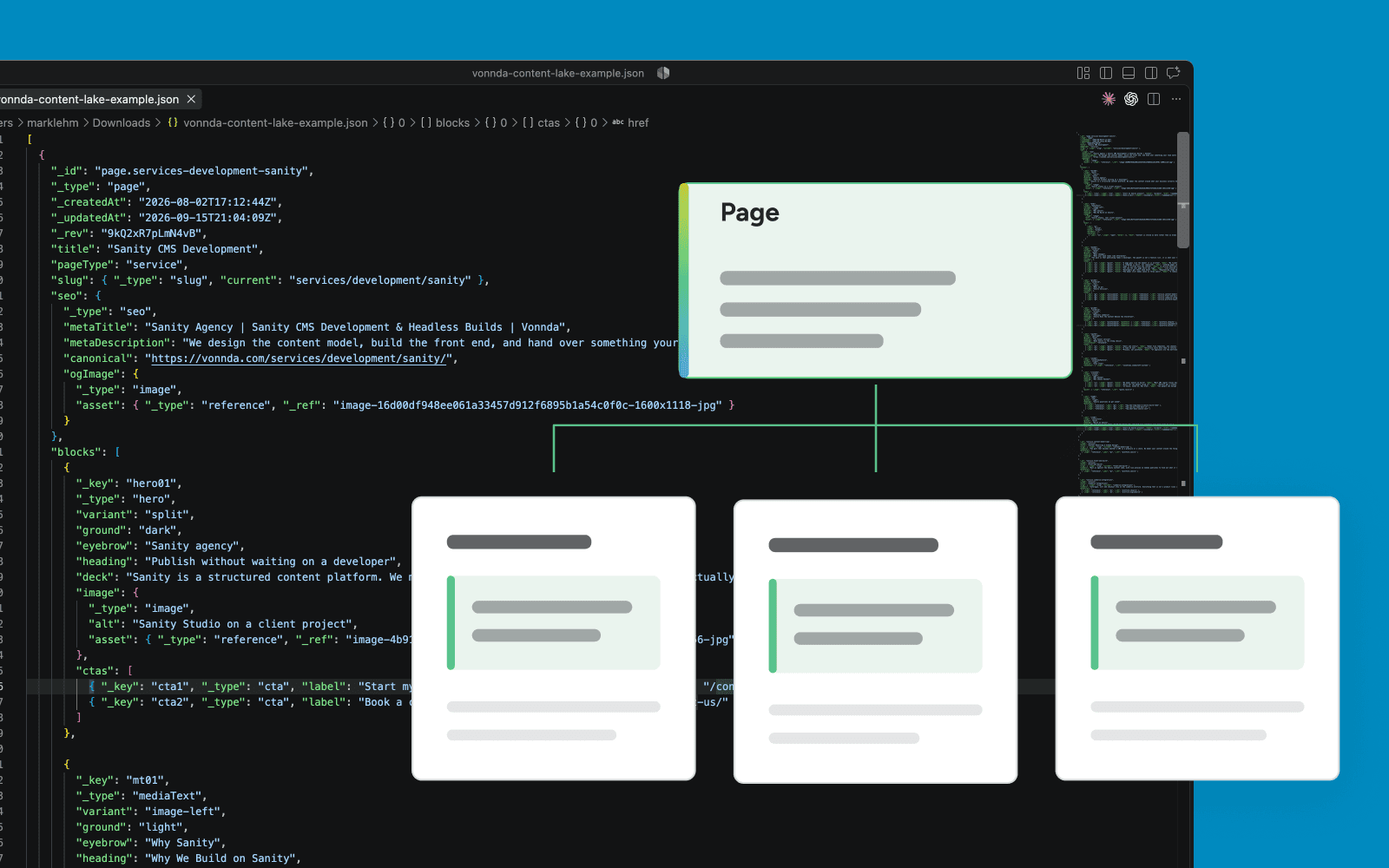
The part that decides whether a CMS is a pleasure or a chore. We model your content around the things your business actually has (services, case studies, products, people) rather than around pages, so the same content can be reused wherever it is needed.
Front-End Builds
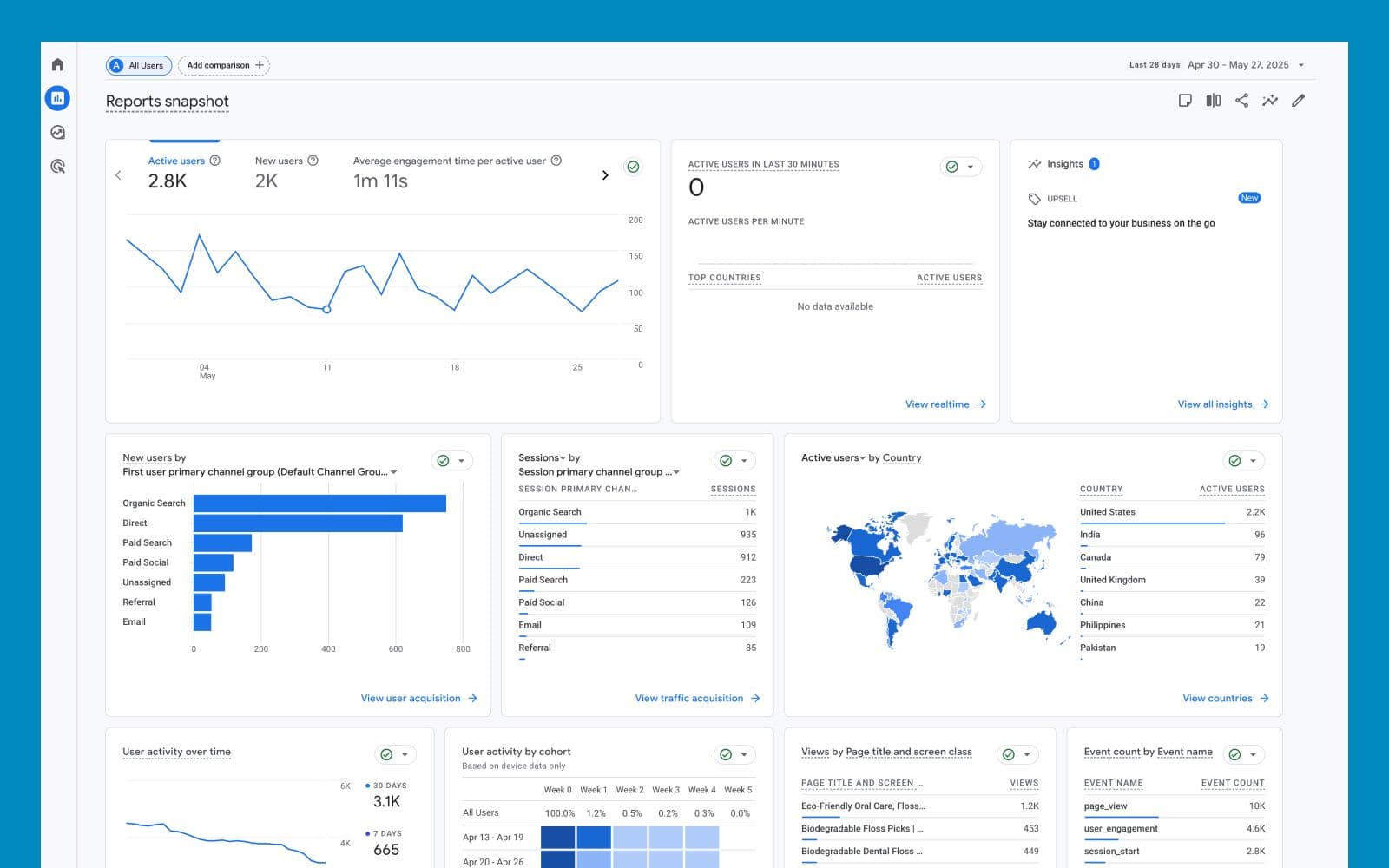
Next.js front ends built against the Content Lake, with live preview so editors see the real page as they type. Fast by default: statically rendered where it can be, revalidated the moment something is published.
Commerce Integrations
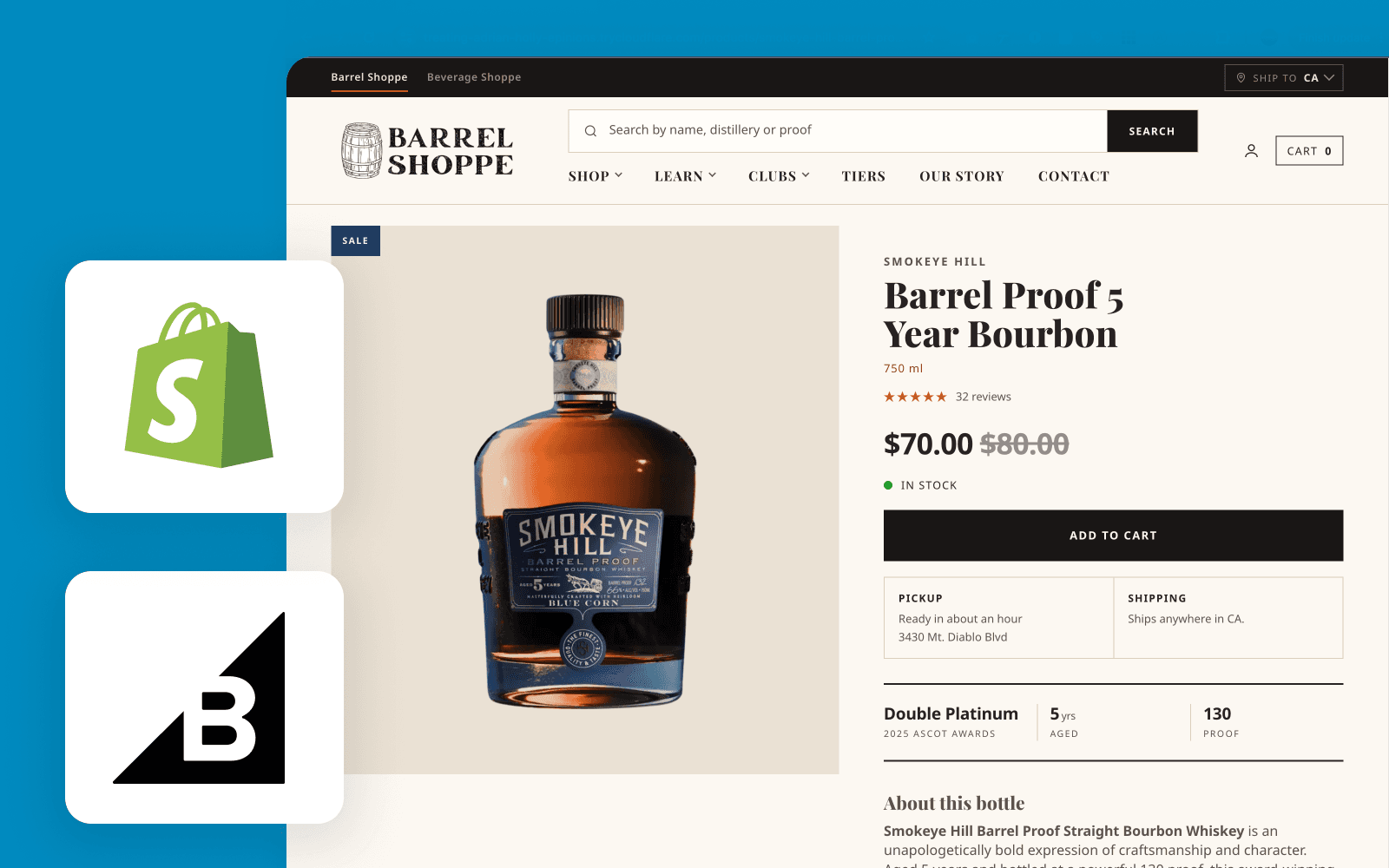
Sanity for content, your platform for catalogue and checkout. We pair it with BigCommerce, Shopify, and Adobe Commerce so merchandising and editorial can move independently without the two drifting apart.
Shopify, BigCommerce or custom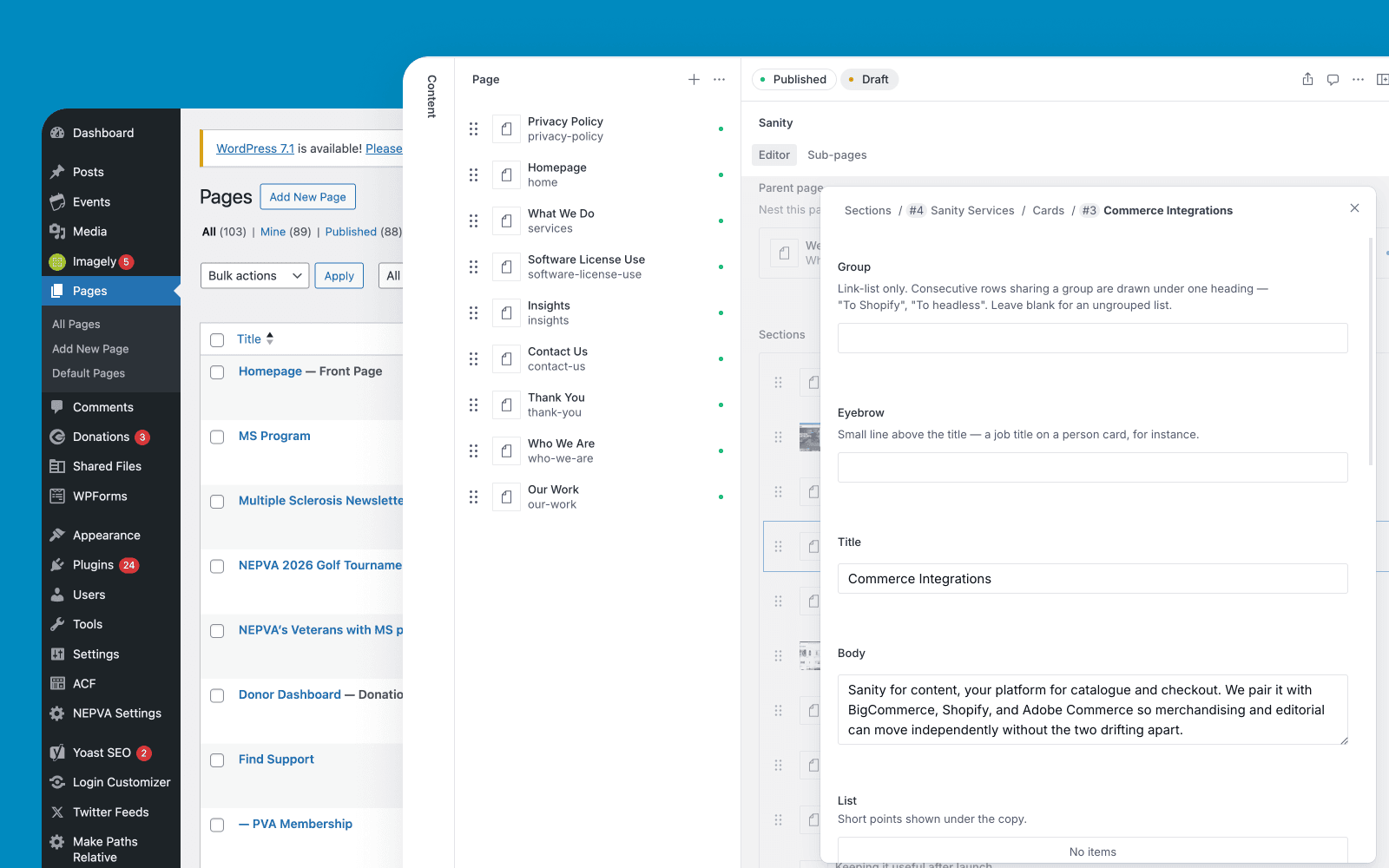
Migrations from WordPress & Legacy CMS
We map the old content to a new model, script the migration so it can be run and re-run, and keep your URLs and SEO intact. No copy-and-paste marathon, and no surprises at cutover.
How a migration runs
Headless commerce
Sanity Runs the Content Behind the Storefront
With Shopify
Hydrogen for the storefront, Sanity for the content around it. Merchandisers work in Shopify, editors work in Sanity, and neither waits on a developer to publish.
Headless Shopify with SanityWith BigCommerce
Open APIs and native B2B on the commerce side, Sanity for the content layer. A natural pairing when the catalogue is complex and the storefront still has to sell.
BigCommerce buildsWith a custom commerce build
When neither platform fits: unusual pricing, a bespoke ordering flow, commerce inside something that is not a shop. Sanity is the content back end for whatever we build instead.
Talk through the build
Case study
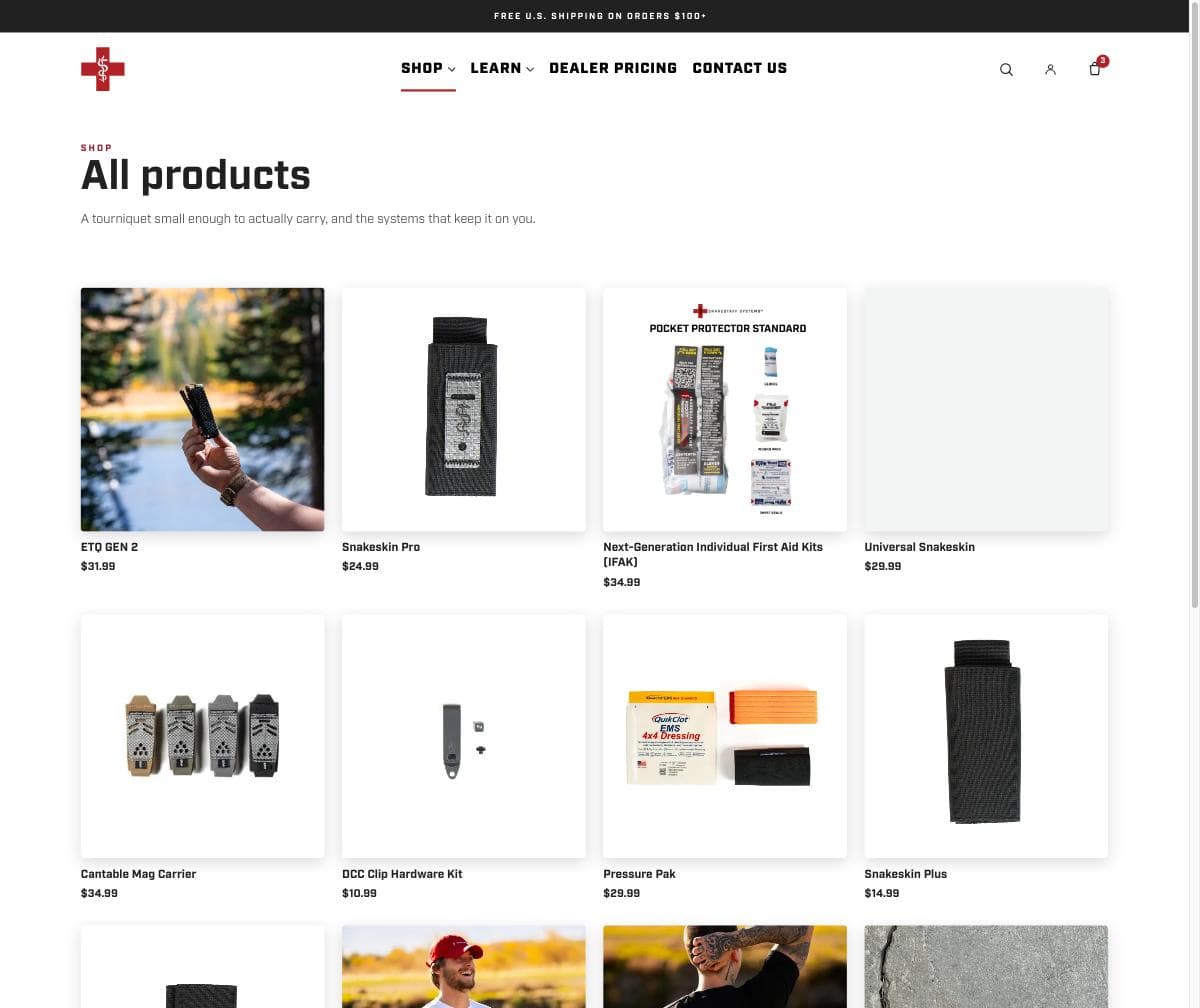
Headless BigCommerce with Sanity as the content layer
Snakestaff Systems makes emergency hemorrhage control equipment carried by federal agencies and civilians. The catalogue lives in BigCommerce, everything that is not a product lives in Sanity, and the move off Squarespace brought a decade of order history with it.
- 62,749
- orders migrated
- 47,600+
- customer accounts carried over
- 18 days
- first commit to launch
The honest version
When Sanity is the wrong choice
We are platform agnostic, which is worth nothing if we never say what it rules out. Sanity is not the right answer for every site, and the cases below are real ones we have talked clients out of.
Small and static
A five-page brochure site does not need it. If the content is a handful of pages that change twice a year, a headless CMS adds a build step and a second system to learn in exchange for flexibility nobody will use. WordPress, or a static site, will cost less and annoy you less.
A team of one
The argument for structured content is that it stops people blocking each other. With one person writing everything, there is nobody to block, and the editing overhead lands on the only person you have.
Process, not platform
When publishing is slow because three people have to approve every sentence, moving the approvals into a different tool moves the queue, not the wait. We would rather say that on a call than take the project.
Already on something that works
The cost of a migration is real, and being on a platform two years out of fashion is not by itself a reason to move. The reasons that hold up are the ones on this page: publishing blocked on engineering, content trapped in one front end, or a model that stopped matching the business.
Migrations
Migrating to Sanity
From a page builder
WordPress→Sanity
Plugin sprawl and page-builder markup, untangled into real content.
How we migrateSquarespace→Sanity
No clean export, so the model gets rebuilt before anything moves.
How we migrateWix→Sanity
The hardest to leave, scoped as content re-entry from the start.
How we migrateAlready structured
Craft CMS→Sanity
Already structured, so it maps to a Sanity schema almost directly.
How we migrateContentful→Sanity
A model already exists; the work is translation, not reconstruction.
How we migrate
Why Vonnda
Why Choose Vonnda?
We Model Before We Build
Most CMS regret traces back to a content model that was designed page by page. We start with the model, and the build follows from it.
Built for the People Using It
Editors get a studio organised around their work, with clear fields, sensible defaults and preview, so the site keeps getting updated after launch.
In-House, Hands-On, Bay Area
Strategy, design, and engineering under one roof in the Bay Area. The people who design your content model are the people who build against it.
After launch
Keeping it useful after launch
Conversion Rate Optimization
Structured content makes testing far easier: variants are data, not duplicated templates. We find the friction and ship the changes that move revenue.
Improve your conversionsCare Plan & Ongoing Support
Dependency updates, monitoring and a standing block of hours for the small changes that otherwise pile up. The site stays current instead of ageing until it needs another rebuild.
See how we support buildsEditor Training & Onboarding
A working session with the people who publish, recorded, plus written notes on your own schema. New starters learn the studio from your content rather than from generic documentation.
Talk about training
Build on Sanity
Whether you are migrating off a legacy CMS or pairing content with a commerce platform, we will design the model, build the front end, and hand over something your team wants to use.